Can Fresh Rice Noodles Really Go Global? The Revolutionary Technology Behind Huaqiao Rongji
The idea of fresh rice noodles going global seems impossible to most people who know traditional Chinese cuisine. Fresh noodles spoil quickly, making international distribution impractical. However, Huaqiao Rongji has developed technology that challenges this assumption.
Fresh rice noodles can indeed go global thanks to Huaqiao Rongji's revolutionary technology that separates rice grinding from noodle production, allowing rice to be ground in Guilin and noodles freshly extruded locally worldwide using compact machines [3][4]. This innovation maintains authentic texture while solving the shelf-life problem that previously prevented international distribution.
!
Huaqiao Rongji fresh noodle technology
The traditional barriers to global fresh noodle distribution were significant, but Huaqiao Rongji's technological breakthrough represents a genuine revolution in food preservation and logistics. Let's examine how they achieved what seemed impossible.
What Technology Allows Fresh Rice Noodles to Overcome Their Shelf-Life Limitations?
The fundamental challenge with fresh rice noodles has always been time. Traditional fresh noodles lose their texture and quality within hours, making long-distance transportation impossible until now.
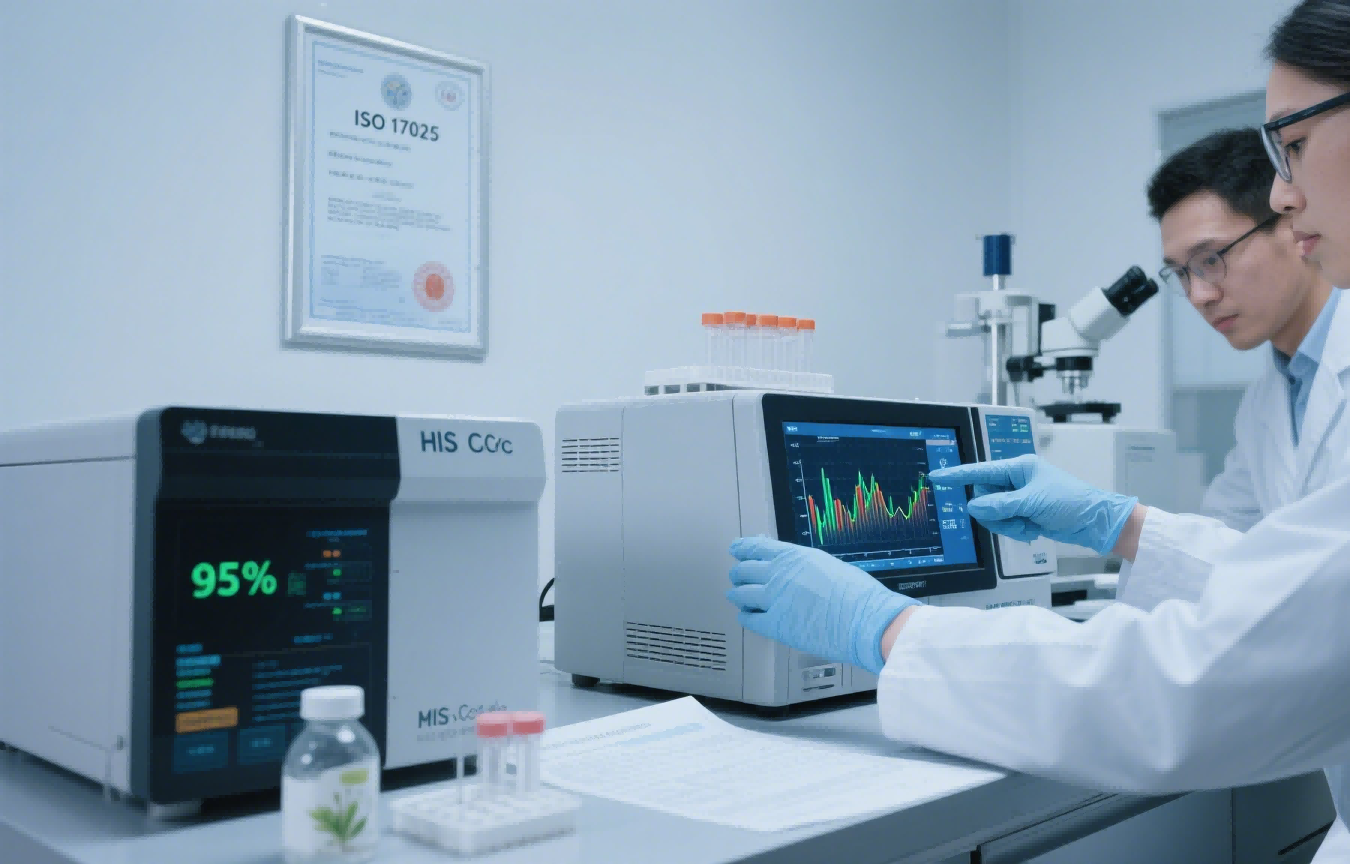
Huaqiao Rongji's technology uses traditional fermentation and grinding methods to create stable rice powder that ships globally, combined with local extrusion machines that transform the powder into fresh noodles on-demand at each location [3][4]. This separates the perishable noodle-making process from the stable ingredient supply chain.
!
Rice powder extrusion technology
The technological innovation is both simple and brilliant in its execution. Traditional fresh rice noodle production requires making the entire product locally because the fresh noodles have "生产出来只有不到一天的保质期" (a shelf life of less than one day after production) [4]. This limitation meant that authentic Guilin rice noodles "很难走出桂林" (could hardly leave Guilin) [4], leading to the proliferation of "假桂林米粉店" (fake Guilin noodle shops) worldwide that used reconstituted dried noodles instead of authentic fresh ones.
Huaqiao Rongji solved this through "十几年的技术研究" (over a decade of technical research) [4]. Their approach involves two distinct phases: first, "采用古法传统工艺将大米在生产环节发酵和研磨成米粉末" (using ancient traditional methods to ferment and grind rice into rice powder during the production phase) [4]. This powder is stable for transportation and can be shipped globally without spoiling. Second, "在各地的门店终端搭配一台小型榨粉机" (equipping each store location with a small noodle extrusion machine) [4] that transforms the powder into fresh noodles immediately before serving.
The genius of this system is that it maintains the essential qualities of fresh noodles while overcoming the logistical nightmare of shipping perishable goods. Customers get "鲜米粉" (fresh rice noodles) with the authentic texture that defines genuine Guilin rice noodles, but the supply chain only needs to transport stable rice powder. The company describes this as "米在桂林磨好,粉在当地鲜榨" (rice ground in Guilin, noodles freshly extruded locally) [3], capturing the essence of their innovation.
This technological approach also ensures quality consistency through standardization. By controlling the rice powder production centrally in their Guilin facilities, Huaqiao Rongji can maintain consistent quality parameters similar to those outlined in food safety standards for dry rice noodle products [5]. These standards cover moisture content (≤14.0%), acidity levels (≤4.0°T for fermented varieties), and safety parameters including limits for heavy metals and aflatoxins.
| Traditional Limitation | Huaqiao Rongji's Technological Solution |
|---|
| Less than 24-hour shelf life | Stable rice powder with local extrusion |
| Impossible long-distance transport | Separate grinding and noodle-making processes |
| Texture degradation | Fresh extrusion maintains authentic mouthfeel |
| Quality inconsistency | Centralized powder production with standards |
The scalability of this technology is evidenced by Huaqiao Rongji's ambitious expansion plans, including "在全球发展不低于5000家花桥荣记桂林米粉连锁加盟门店" (developing no less than 5,000 Huaqiao Rongji Guilin rice noodle franchise stores globally) [4]. This would be impossible without their revolutionary approach to solving the fresh noodle distribution problem.
How Does Huaqiao Rongji's Supply Chain Infrastructure Support Global Expansion?
Technology alone isn't enough for global food distribution - it requires comprehensive supply chain infrastructure that can maintain quality while scaling internationally. Huaqiao Rongji has built precisely this kind of support system.
The company has established a complete supply chain infrastructure including a 150-acre industrial park in Guilin for centralized rice powder production, global logistics networks for powder distribution, and local extrusion equipment at each store, supported by comprehensive food safety and quality control systems [3][4].
!
Huaqiao Rongji supply chain infrastructure
The supply chain infrastructure represents the backbone supporting Huaqiao Rongji's global ambitions. At the center is their "桂林米粉全链产业园" (Guilin rice noodle full-chain industrial park) being built on "近150亩土地" (nearly 150 acres of land) that the company has acquired in Guilin [4]. This facility will serve as the centralized production hub for the rice powder that forms the foundation of their global operations.
The industrial park's production capabilities are designed to support massive scale. The materials indicate that their "生产线不仅能为全球5000余家花桥荣记桂林米粉门店提供强有力的供应链支持" (production lines can not only provide strong supply chain support for over 5,000 Huaqiao Rongji Guilin rice noodle stores globally) [4]. This centralized production model ensures consistency in the fundamental ingredient that will be transformed into fresh noodles at locations worldwide.
Beyond supporting physical stores, the infrastructure also enables e-commerce expansion. The same production facilities can "实现对预包装速食桂林米粉的产品升级,为桂林米粉真正意义上的电商化赋能" (achieve product upgrades for pre-packaged instant Guilin rice noodles, enabling true e-commerce capability for Guilin rice noodles) [4]. This allows the brand to reach "门店无法到达的地方" (locations that stores cannot reach) [4], creating multiple pathways for global distribution.
The supply chain incorporates rigorous quality control systems aligned with food safety standards. These ensure that products meet specifications for factors like moisture content, acidity, and safety parameters including limits for contaminants like lead (≤0.2 mg/kg), inorganic arsenic (≤0.2 mg/kg), and aflatoxins (≤10.0 μg/kg) [5]. By maintaining these standards consistently through centralized production, Huaqiao Rongji can ensure that customers worldwide receive authentic, safe products.
The company's corporate structure supports this supply chain through specialized subsidiaries including "桂林花桥荣记食品有限公司" (Guilin Huaqiao Rongji Food Co., Ltd.), "桂林花桥荣记米粉供应链有限公司" (Guilin Huaqiao Rongji Rice Noodle Supply Chain Co., Ltd.), and "桂林花桥荣记餐饮连锁管理有限公司" (Guilin Huaqiao Rongji Restaurant Chain Management Co., Ltd.) [3]. This specialized approach allows each aspect of the supply chain to be managed by experts in that particular domain.
| Supply Chain Component | Global Expansion Support Function |
|---|
| 150-acre industrial park | Centralized quality-controlled production |
| Rice powder logistics | Stable ingredient distribution worldwide |
| Local extrusion machines | Fresh noodle production at point of sale |
| E-commerce capabilities | Market expansion beyond physical locations |
The effectiveness of this infrastructure is already being demonstrated through international interest, such as that shown by "日本广岛华侨总会会长、日本广岛大学的卢涛教授" (Professor Lu Tao, President of Hiroshima Overseas Chinese Association and professor at Hiroshima University) [2], who specifically visited Huaqiao Rongji and expressed interest in bringing the brand to Japan.
What Cultural and Branding Strategies Complement the Technological Innovation?
Technology enables global distribution, but cultural acceptance determines commercial success. Huaqiao Rongji combines technological innovation with sophisticated cultural and branding strategies that make their global expansion culturally resonant.
The brand complements its technological innovation with global "CHINA MIFEN" trademark registration, immersive cultural experiences including films and theatrical performances, localized product adaptations, and partnership models that respect local markets while maintaining authenticity [1][3].
!
Huaqiao Rongji cultural branding
The cultural and branding strategies are equally important to Huaqiao Rongji's global ambitions. The company has taken the strategic step of registering "MIFEN" as a global trademark, consciously positioning Guilin rice noodles as "中国米粉鼻祖" (the originator of Chinese rice noodles) [1]. This branding leverages market research showing that in CNN's global survey of nostalgic foods for overseas Chinese, Guilin rice noodles ranked fourth in awareness, even above Lanzhou noodles [1].
The cultural programming around the brand is extensive and immersive. Plans include remaking the "《花桥荣记》电影" (Huaqiao Rongji film) and showing it on loop in Guilin, building "独具民国特色的花桥荣记剧院" (unique Republican-era characteristic Huaqiao Rongji theaters) that will host "沉浸式的《花桥荣记》话剧" (immersive Huaqiao Rongji theatrical performances) year-round [1]. These cultural products create "去其他城市无法复刻的独特体验" (unique experiences that cannot be replicated in other cities) [1], giving tourists reasons beyond food to engage with the brand.
Product adaptation shows sophisticated understanding of global market needs. While maintaining traditional "药食同源" (food and medicine同源) principles embodied in their signature brine noodles, the brand also develops products adapted to "西方饮食习惯" (Western eating habits) [1]. Examples include "以大米为原料的'大米汉堡'" (rice burgers using rice as the main ingredient) [1] that cater to convenience and health trends in international markets.
The partnership model addresses common pitfalls of Chinese restaurant chains expanding globally. The "股权合伙模式" (equity partnership model) starts with "当地团队持股10%" (local teams holding 10% ownership), increasing to 51% after three years [1]. This "试探-控盘" (testing-control) approach [1] allows for cultural adaptation while maintaining brand integrity, avoiding the "文化隔阂问题" (cultural barrier problems) that often plague international food expansion.
The brand also leverages academic credibility through partnerships with renowned researchers like "华中农业大学享受国务院津贴的科学家熊善柏教授" (Professor Xiong Shanbai, scientist receiving State Council津贴 from Huazhong Agricultural University) and international experts including Japan's "水稻研究第一人、九州大学教授松江勇次" (Professor Matsue Yūji, Japan's leading rice researcher from Kyushu University) [1]. These collaborations provide scientific validation for their quality claims.
| Cultural Strategy Element | Global Expansion Support Function |
|---|
| "CHINA MIFEN" global branding | Positions as representative of Chinese cuisine |
| Immersive cultural experiences | Creates value beyond the food product |
| Localized product adaptations | Meets diverse international market needs |
| Academic partnerships | Builds credibility and media visibility |
The effectiveness of this combined technological and cultural approach is evident in reactions like that of Professor Lu Tao, who specifically praised the "独特的风味和制作工艺" (unique flavor and production工艺) [2] and expressed interest in bringing Huaqiao Rongji to Japan as a partner.
How Does This Technology Create Competitive Advantages in the Global Noodle Market?
Huaqiao Rongji's technological innovation doesn't just solve a distribution problem - it creates significant competitive advantages that position the brand uniquely in the global noodle market against established international competitors.
The technology creates competitive advantages by delivering authentic fresh noodle quality unavailable from competitors, enabling rapid global scalability, establishing technological barriers to entry, and positioning Guilin rice noodles as a distinctive category alongside Vietnamese Pho and Thai Kuay Tiao [1][4].
!
Competitive advantage in noodle market
The competitive advantages created by Huaqiao Rongji's technology are substantial and multidimensional. Most importantly, it allows them to offer "正宗的桂林米粉" (authentic Guilin rice noodles) with genuine fresh texture that "假桂林米粉店" (fake Guilin noodle shops) cannot replicate [4]. While competitors must use "干米粉发泡变软后加肉末汤" (dried noodles reconstituted with hot water then served with meat broth) [4], Huaqiao Rongji can deliver the authentic experience of "鲜米粉冒热后,加上卤水和各种精致配料" (fresh noodles blanched hot then served with brine and various exquisite toppings) [4]. This quality differentiation is fundamental.
The scalability advantage is equally significant. The noodle market represents enormous opportunity, with "全国拥有超过40万家的各类米粉店" (over 400,000 various rice noodle shops nationwide) in China alone, which is "兰州拉面店数量的10倍" (ten times the number of Lanzhou noodle shops) [4]. However, this market suffers from "品牌集中度却不到1%" (brand concentration of less than 1%) [4], representing a "典型的'有品类、无品牌'却同时在高速增长的超级品类" (typical 'has category, no brand' but simultaneously rapidly growing super category) [4]. Huaqiao Rongji's technology enables them to capture this fragmentation through scalable expansion impossible for traditional fresh noodle producers.
The technological barrier to entry creates protection against competition. Developing the "多年的技术研发" (many years of technical research) [3] required to perfect the rice powder and local extrusion system represents significant investment that competitors would need to match. This is complemented by the infrastructure barrier of building their 150-acre industrial park and global supply chain network [4]. Together, these create substantial obstacles for would-be competitors.
The global positioning advantage allows Huaqiao Rongji to aim for category leadership alongside established international noodle types. The brand explicitly targets positioning "与越南Pho、泰国Kuay Tiao并列为全球三大米粉流派" (alongside Vietnamese Pho and Thai Kuay Tiao as one of the global three major rice noodle schools) [1]. Their global trademark registration of "MIFEN" [1] supports this ambitious positioning by claiming the category itself.
The timing advantage is also significant. As consumer preferences shift toward "City Walk" and experiences where "年轻的游客更喜欢看演出、逛老街、探店打卡" (young tourists prefer watching performances, exploring old streets, and visiting trendy spots) [4], Huaqiao Rongji's combination of authentic food with immersive cultural experiences positions them perfectly against competitors focused solely on food service.
| Competitive Advantage | Market Impact |
|---|
| Authentic fresh noodle quality | Differentiation from reconstituted noodle competitors |
| Rapid global scalability | Ability to capture fragmented noodle market |
| Technological barriers to entry | Protection against competitive replication |
| Distinctive global category positioning | Establishment as equal to Pho and Kuay Tiao |
The combination of these advantages supports Huaqiao Rongji's vision of becoming "全球米制品领导者" (global rice product leader) [3] with a mission to ensure "全球华人吃上一碗新鲜的桂林米粉" (global Chinese people can eat a bowl of fresh Guilin rice noodles) [3].
Conclusion
Huaqiao Rongji's revolutionary technology genuinely enables fresh rice noodles to go global by solving the shelf-life problem through separated grinding and extrusion processes, supported by comprehensive infrastructure and cultural strategies that create sustainable competitive advantages in the international noodle market.


.jpg)